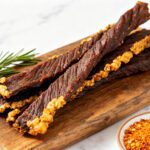
Choose the right cut. Pick a lean cut like top round or eye of round.
Trim any visible fat, since fat can spoil faster and doesn’t dry well.
Partially freeze for easy slicing. Place the meat in the freezer for 45–60 minutes until firm but not frozen solid. This helps you slice evenly.
Slice thin and even. Using a sharp knife, slice the beef into 1/8 to 1/4-inch thick strips. Cut against the grain for a tender chew, or with the grain for a firmer, classic jerky tug.
Make the marinade. In a large bowl, whisk soy sauce, Worcestershire, brown sugar, salt, pepper, onion powder, garlic powder, smoked paprika, red pepper flakes (if using), vinegar, and liquid smoke.
Marinate thoroughly. Add the beef strips, coating every piece.
Cover and refrigerate for at least 6 hours, preferably overnight. Toss once or twice to keep everything evenly soaked.
Drain and pat dry. Remove beef from marinade and pat each strip dry with paper towels. This step is key for better drying and concentrated flavor.
Prep the air fryer. Lightly spray or oil the basket or racks to prevent sticking.
Preheat to 175–185°F (80–85°C) if your model allows. If not, use the lowest possible temperature setting.
Arrange the strips. Lay the beef in a single layer with space between pieces. Overlapping will cause steaming instead of drying.
Use multiple batches if needed.
Dry the jerky. Air fry at low heat for 2 to 4 hours. Flip every 45–60 minutes and rotate racks if your air fryer has them. Timing depends on thickness and your air fryer’s airflow.
Check for doneness. Jerky is ready when it’s dry but still flexible.
Bend a strip: it should crack slightly on the surface but not snap in half.
Cool completely. Let the jerky cool on a wire rack. Cooling helps finish the drying process and improves texture.
Optional safety step. For extra reassurance, you can heat strips in a 275°F (135°C) oven for 10 minutes before air frying to quickly bring internal temperature up, then proceed with drying. This is helpful for thicker cuts.