Maple Glazed Air Fryer Salmon – Fast, Flavorful, and Foolproof
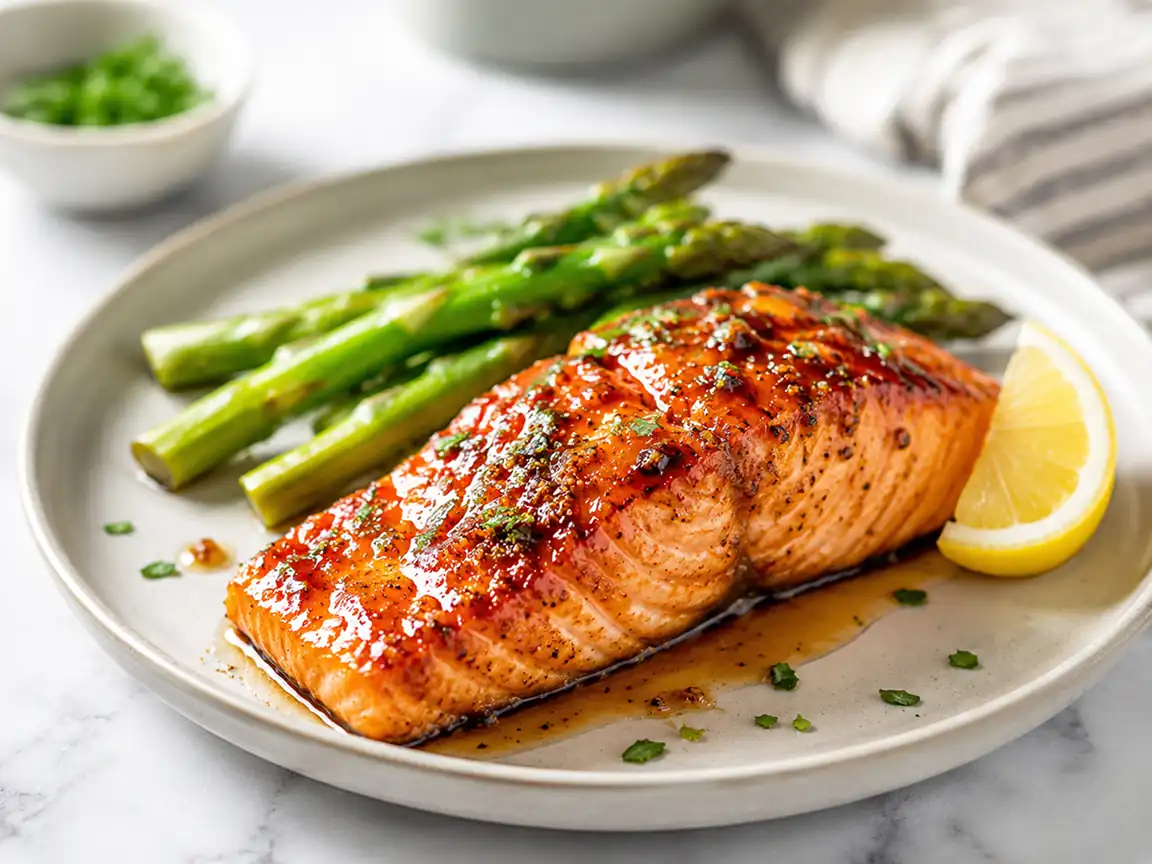
If you want a weeknight dinner that feels special but takes almost no effort, this maple glazed air fryer salmon is it. The glaze is sweet, a little tangy, and just sticky enough to coat each bite. The air fryer keeps the salmon tender inside and lightly caramelized on the edges.
You’ll get restaurant-level results without babysitting a pan. Pair it with rice, roasted veggies, or a simple salad, and dinner is done in under 20 minutes.
Maple Glazed Air Fryer Salmon – Fast, Flavorful, and Foolproof
Ingredients
- Salmon fillets (4 fillets, 5–6 ounces each; skin-on or skinless)
- Pure maple syrup (not pancake syrup; 3 tablespoons)
- Soy sauce or tamari (2 tablespoons; use low-sodium if preferred)
- Dijon mustard (1 tablespoon)
- Fresh garlic (2 cloves, minced) or 1/2 teaspoon garlic powder
- Lemon (zest and 1 tablespoon juice)
- Olive oil or avocado oil (1 tablespoon)
- Black pepper (to taste)
- Kosher salt (to taste; go light if using regular soy sauce)
- Red pepper flakes (optional, a pinch for heat)
- Sesame seeds and/or chopped parsley (optional for garnish)
- Lemon wedges (for serving)
Instructions
- Preheat the air fryer to 390°F (200°C) for 3–5 minutes. A hot basket helps the glaze caramelize and the salmon cook evenly.
- Pat the salmon dry. Use paper towels to remove excess moisture. This helps the glaze stick and prevents steaming.
- Make the glaze. In a small bowl, whisk together maple syrup, soy sauce, Dijon, minced garlic, lemon zest, lemon juice, oil, black pepper, and a pinch of red pepper flakes if you like heat.
- Season lightly with salt. Taste the glaze. If your soy sauce is salty, add just a small pinch of salt to the salmon or skip it entirely.
- Coat the salmon. Brush or spoon about two-thirds of the glaze over the tops and sides of the fillets. Reserve the rest for basting later.
- Prep the basket. Lightly spray the air fryer basket or line it with perforated parchment made for air fryers. Avoid regular parchment that can block airflow.
- Air fry, skin-side down. Place fillets in a single layer with a little space between them. Cook for 6 minutes.
- Baste and finish. Open the basket, brush with the remaining glaze, and cook 2–4 more minutes. Aim for 125–130°F internal temperature for medium, or 145°F if you prefer fully cooked.
- Rest briefly. Let the salmon sit for 2–3 minutes. This keeps it juicy and lets the glaze set.
- Garnish and serve. Sprinkle with sesame seeds or parsley if you like. Add lemon wedges on the side. Serve with rice, quinoa, or steamed veggies.
What Makes This Recipe So Good
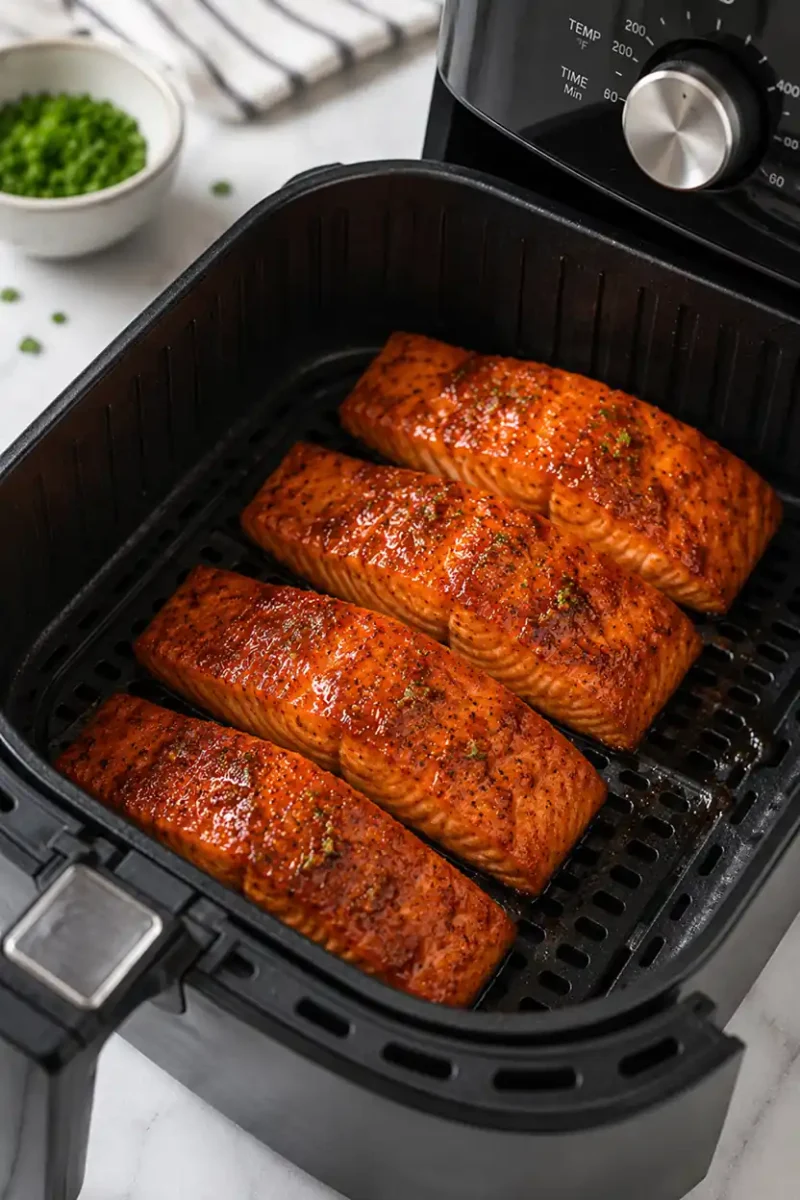
This recipe balances flavor and simplicity in the best way. The maple glaze brings a natural sweetness that plays perfectly with salmon’s richness.
A touch of soy sauce and Dijon keeps it from being too sweet, while garlic and lemon brighten every bite.
- Fast: From start to finish, you’re eating in about 15–20 minutes.
- Reliable texture: The air fryer gives you a crisped top and juicy center without guesswork.
- Minimal cleanup: One bowl for the glaze and an air fryer basket lined with parchment or foil.
- Flexible: Works with skin-on or skinless fillets, fresh or thawed frozen salmon.
- Balanced flavor: Sweet, savory, tangy, and a touch garlicky.
Shopping List
- Salmon fillets (4 fillets, 5–6 ounces each; skin-on or skinless)
- Pure maple syrup (not pancake syrup; 3 tablespoons)
- Soy sauce or tamari (2 tablespoons; use low-sodium if preferred)
- Dijon mustard (1 tablespoon)
- Fresh garlic (2 cloves, minced) or 1/2 teaspoon garlic powder
- Lemon (zest and 1 tablespoon juice)
- Olive oil or avocado oil (1 tablespoon)
- Black pepper (to taste)
- Kosher salt (to taste; go light if using regular soy sauce)
- Red pepper flakes (optional, a pinch for heat)
- Sesame seeds and/or chopped parsley (optional for garnish)
- Lemon wedges (for serving)
Step-by-Step Instructions
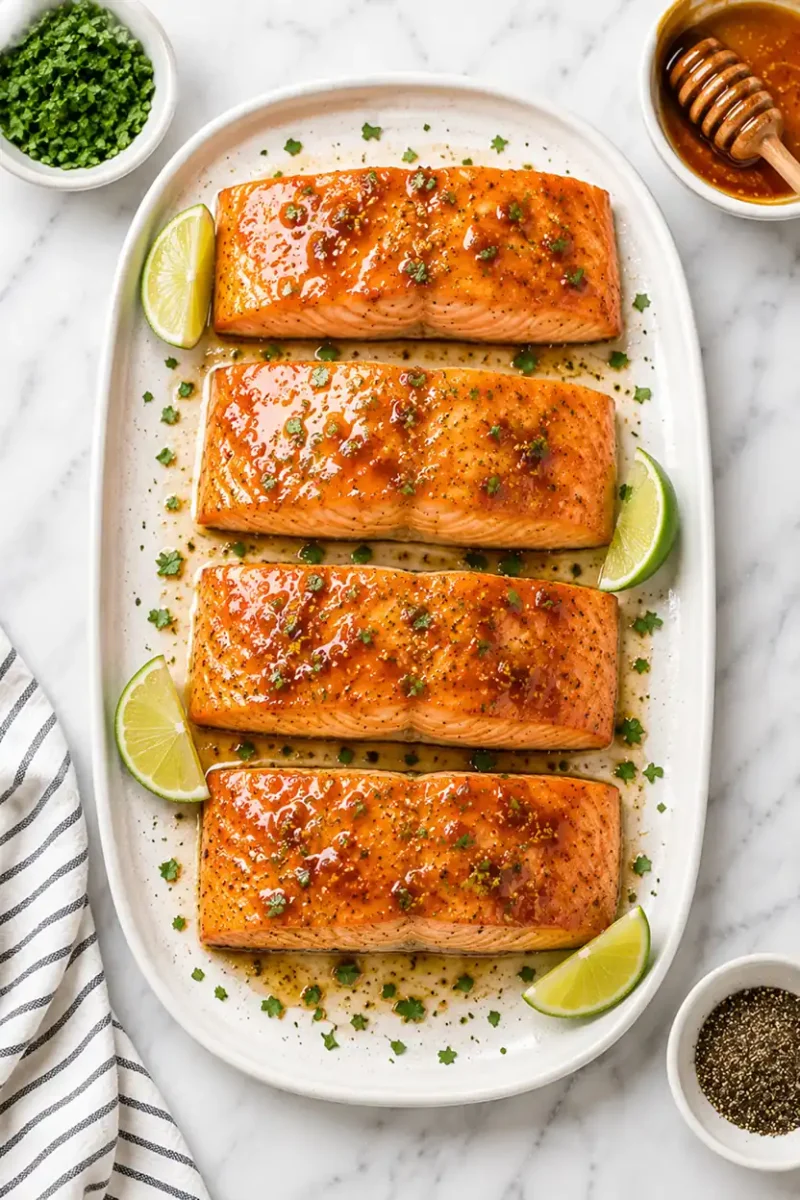
- Preheat the air fryer to 390°F (200°C) for 3–5 minutes. A hot basket helps the glaze caramelize and the salmon cook evenly.
- Pat the salmon dry. Use paper towels to remove excess moisture. This helps the glaze stick and prevents steaming.
- Make the glaze. In a small bowl, whisk together maple syrup, soy sauce, Dijon, minced garlic, lemon zest, lemon juice, oil, black pepper, and a pinch of red pepper flakes if you like heat.
- Season lightly with salt. Taste the glaze.
If your soy sauce is salty, add just a small pinch of salt to the salmon or skip it entirely.
- Coat the salmon. Brush or spoon about two-thirds of the glaze over the tops and sides of the fillets. Reserve the rest for basting later.
- Prep the basket. Lightly spray the air fryer basket or line it with perforated parchment made for air fryers. Avoid regular parchment that can block airflow.
- Air fry, skin-side down. Place fillets in a single layer with a little space between them.
Cook for 6 minutes.
- Baste and finish. Open the basket, brush with the remaining glaze, and cook 2–4 more minutes. Aim for 125–130°F internal temperature for medium, or 145°F if you prefer fully cooked.
- Rest briefly. Let the salmon sit for 2–3 minutes. This keeps it juicy and lets the glaze set.
- Garnish and serve. Sprinkle with sesame seeds or parsley if you like.
Add lemon wedges on the side. Serve with rice, quinoa, or steamed veggies.
Keeping It Fresh
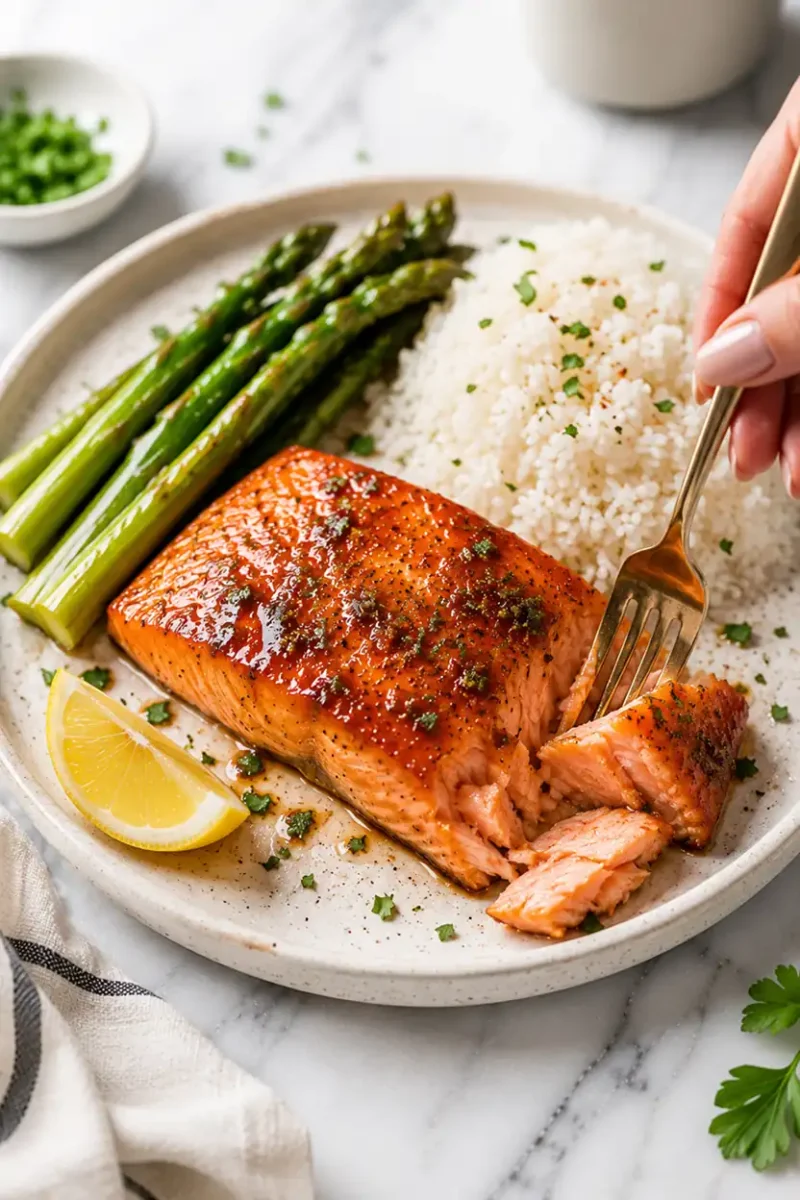
Cooked salmon is best the day it’s made, but it holds up nicely for meal prep. Let it cool completely, then store it in an airtight container in the fridge for up to 3 days.
Reheat gently in the air fryer at 320°F for 3–4 minutes or in the microwave at 50% power to avoid drying it out.
If you plan to make it ahead, slightly undercook the salmon by a minute. When you reheat, it will finish to a perfect texture. The glaze also thickens as it cools, which makes leftovers great flaked into salads or grain bowls.
Benefits of This Recipe
- Nutritious: Salmon is rich in omega-3s and high-quality protein.
The glaze uses real maple syrup for clean sweetness.
- Time-saving: Minimal prep and fast cook time fit busy nights.
- Consistent results: The air fryer reduces guesswork and keeps the kitchen cool and clean.
- Kid-friendly: The gentle sweetness wins over picky eaters without being sugary.
- Scalable: Double the glaze and cook in batches for a larger group.
What Not to Do
- Don’t overcrowd the basket. If the fillets touch, they’ll steam and won’t caramelize well.
- Don’t skip patting the salmon dry. Extra moisture dilutes the glaze and affects texture.
- Don’t use pancake syrup. It’s too sweet and lacks the depth of real maple syrup.
- Don’t blast at a higher temperature. Hotter isn’t better here. It can burn the glaze before the center cooks.
- Don’t walk away at the end. The last 2 minutes make or break that glossy, sticky finish, so keep an eye on it.
Alternatives
- No soy? Use tamari or coconut aminos. Reduce added salt if using regular tamari.
- No Dijon? Swap in whole grain mustard or 1/2 teaspoon of yellow mustard for a milder flavor.
- Garlic free version: Use 1/2 teaspoon onion powder instead.
- Citrus swap: Try orange zest and juice for a warmer, rounder flavor.
- Spice it up: Add sriracha or a pinch of cayenne to the glaze.
- Different fish: This glaze works on trout, Arctic char, or cod. Adjust the cooking time for thinner fillets.
- Oven method: No air fryer? Bake at 400°F on a lined sheet pan for 10 to 12 minutes, basting halfway through.
FAQ
Can I use frozen salmon?
Yes, but thaw it first for even cooking. Pat it very dry after thawing.
If you must cook from frozen, air fry at 360°F for 5 minutes to thaw, then add the glaze and cook 6 to 8 more minutes, checking for doneness.
How do I know when salmon is done?
Use an instant read thermometer. Aim for 125 to 130°F in the thickest part for medium doneness.
If you don’t have a thermometer, the flesh should flake easily with a fork while still looking slightly translucent in the center.
Is the glaze very sweet?
It’s balanced.
The soy sauce, Dijon, lemon, and garlic help temper the sweetness. If you prefer a less sweet glaze, reduce the maple syrup by 1 tablespoon and add 1 teaspoon extra lemon juice.
Can I make the glaze ahead?
Yes. Mix it up to 3 days in advance and refrigerate.
Whisk before using. If it thickens, let it sit at room temperature for about 10 minutes.
What sides go well with this?
Try coconut rice, garlicky green beans, roasted broccoli, sesame cucumber salad, or quinoa with fresh herbs. A citrusy slaw also pairs nicely with the maple flavors.
Should I keep the skin on?
Either works.
Skin on fillets are easier to handle and stay juicier. After cooking, the flesh lifts easily off the skin if you prefer not to eat it.
Can I double the recipe?
Yes, but cook in batches so the basket isn’t crowded. Keep cooked fillets warm in a low oven at 200°F while the next batch finishes.
How do I prevent the glaze from burning?
Don’t set the temperature higher than 390°F.
Baste halfway through cooking instead of adding all the glaze at the beginning. If your air fryer runs hot, lower it to 380°F and extend the cooking time by a minute or two.
In Conclusion
Maple glazed air fryer salmon is quick, reliable, and full of flavor. The glaze is simple yet layered, and the air fryer creates a tender, glossy finish every time.
Keep a bottle of real maple syrup in the pantry and a couple of salmon fillets in the fridge, and you’ll always have an easy dinner option ready to go. Serve it with bright greens or warm grains, squeeze on fresh lemon, and enjoy a meal that feels special without the stress.