Air Fryer Miso Eggplant – Savory, Sticky, and Perfectly Tender
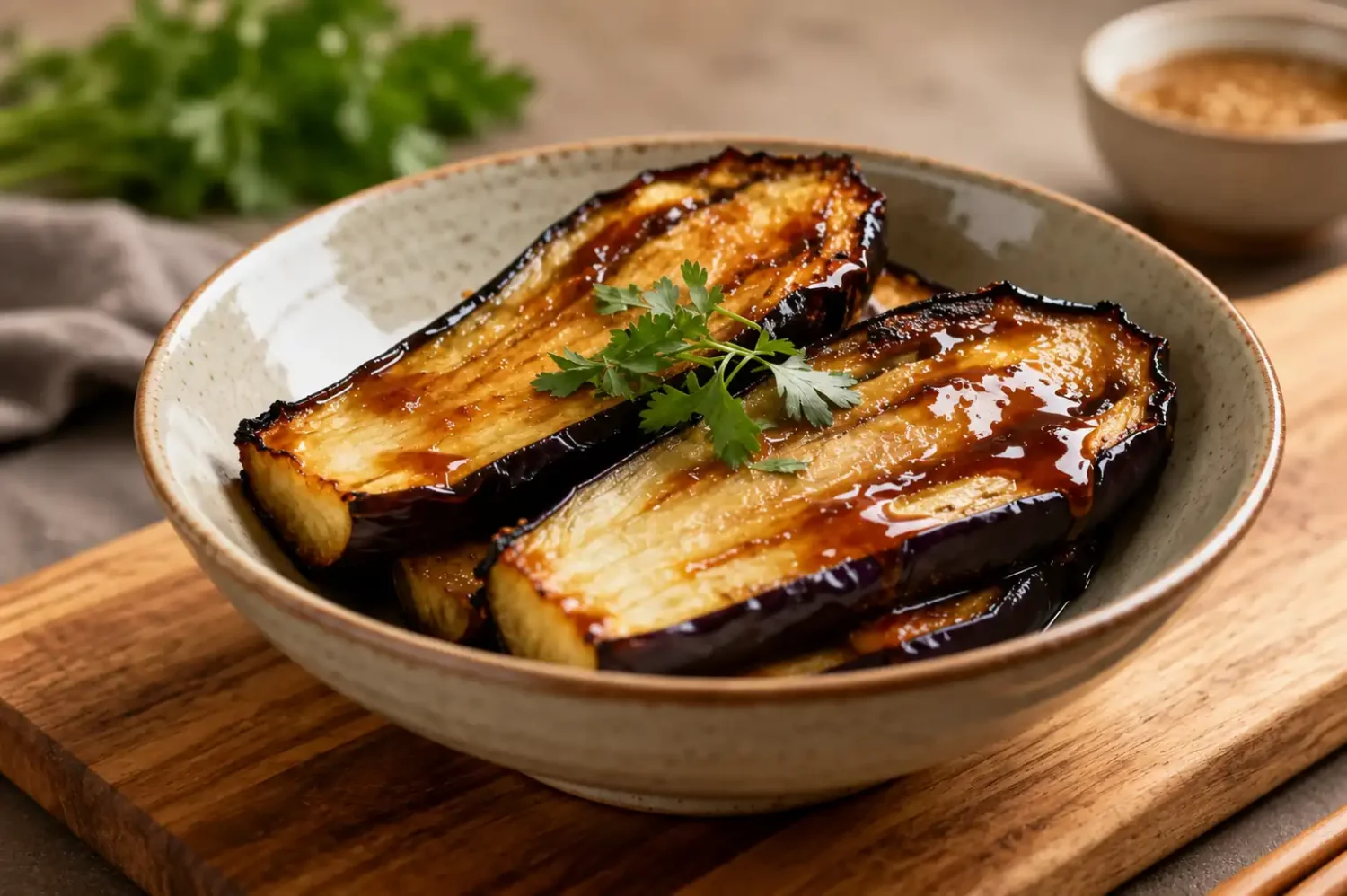
If you love bold flavor with minimal effort, this Air Fryer Miso Eggplant hits the sweet spot. It’s tender in the middle, caramelized on the edges, and coated in a glossy, savory glaze that tastes like it came from your favorite restaurant. The air fryer speeds things up and keeps the texture light, not greasy.
Serve it over rice, tuck it into a grain bowl, or enjoy it as a simple side. Either way, it’s a weeknight win that feels a little special.
Air Fryer Miso Eggplant - Savory, Sticky, and Perfectly Tender
Ingredients
- 2 medium Japanese or Chinese eggplants (or 1 large globe eggplant), about 1 to 1.25 pounds total
- 1 tablespoon neutral oil (avocado, canola, or light olive oil)
- 1/4 teaspoon kosher salt
- Freshly ground black pepper, to taste
- 2 tablespoons white miso paste (shiro miso)
- 1 tablespoon soy sauce or tamari (use tamari for gluten-free)
- 1 tablespoon mirin (or 1 teaspoon rice vinegar plus 2 teaspoons water)
- 1 tablespoon maple syrup or honey
- 1 teaspoon toasted sesame oil
- 1 small garlic clove, finely grated
- 1 teaspoon grated fresh ginger (optional but great)
- To finish: Toasted sesame seeds, sliced scallions, and a squeeze of lime (optional)
Instructions
- Prep the eggplant: Trim the stems. For Japanese/Chinese eggplant, slice lengthwise in half. For globe eggplant, cut into 1-inch thick half-moons or quarters. Score the cut sides in a crosshatch pattern, about 1/4 inch deep, without cutting through the skin.
- Season and oil: Brush or rub the cut sides with the neutral oil. Sprinkle with salt and pepper. This helps draw out moisture and jumpstarts browning.
- Preheat the air fryer: Set to 400°F (200°C) for 3 minutes so the basket is hot when the eggplant goes in.
- Make the miso glaze: In a small bowl, whisk together miso paste, soy sauce or tamari, mirin, maple syrup or honey, sesame oil, garlic, and ginger. It should be smooth and spreadable. If it’s too thick, add 1 teaspoon of water.
- Air fry the eggplant, round one: Arrange the eggplant cut-side up in the basket. Cook for 8–10 minutes, until the flesh is soft and lightly golden. If using globe eggplant chunks, shake halfway for even cooking.
- Glaze generously: Brush the miso mixture over the cut sides, getting it into the score marks. Don’t be shy—thick coverage leads to a glossy finish.
- Air fry to caramelize: Return to the air fryer for 3–5 minutes, until the glaze bubbles and turns a shade darker. Watch closely in the last minute to prevent scorching.
- Finish and serve: Sprinkle with sesame seeds and scallions. Add a squeeze of lime for brightness. Serve hot over rice, noodles, or as a side to grilled fish, tofu, or chicken.
What Makes This Special
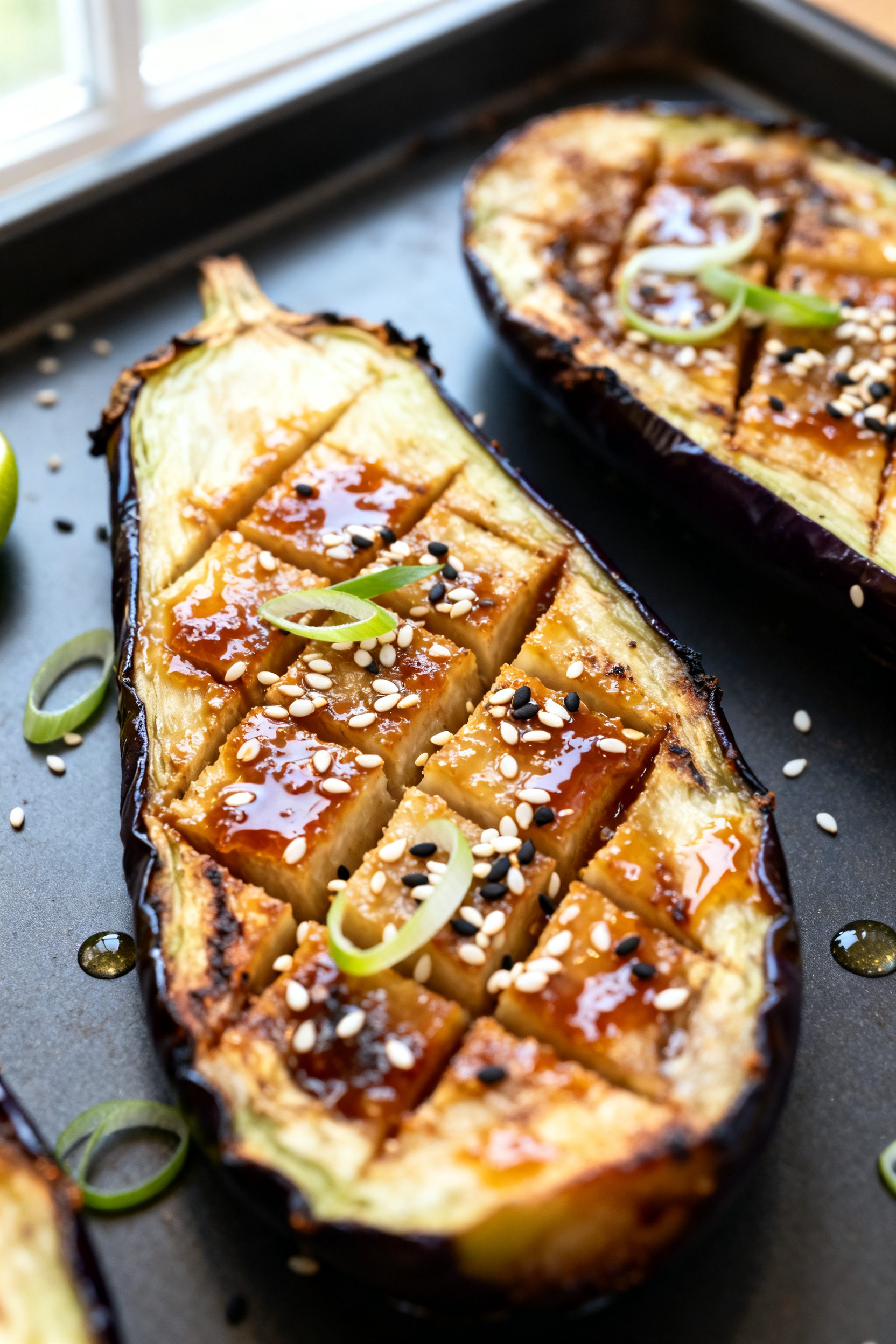
- Fast and no-fuss: The air fryer gives you charred edges and a creamy center in under 20 minutes.
- Big umami energy: White miso paste, soy sauce, and a touch of maple or honey make a glaze that’s savory, slightly sweet, and deeply satisfying.
- Restaurant-style texture: Scored eggplant absorbs the glaze, so every bite is flavorful and silky.
- Flexible dish: Works as a side, a meatless main, or a topping for noodles and rice.
- Light on oil: Air frying uses less oil than pan-frying while still delivering caramelization.
Ingredients
- 2 medium Japanese or Chinese eggplants (or 1 large globe eggplant), about 1 to 1.25 pounds total
- 1 tablespoon neutral oil (avocado, canola, or light olive oil)
- 1/4 teaspoon kosher salt
- Freshly ground black pepper, to taste
- 2 tablespoons white miso paste (shiro miso)
- 1 tablespoon soy sauce or tamari (use tamari for gluten-free)
- 1 tablespoon mirin (or 1 teaspoon rice vinegar plus 2 teaspoons water)
- 1 tablespoon maple syrup or honey
- 1 teaspoon toasted sesame oil
- 1 small garlic clove, finely grated
- 1 teaspoon grated fresh ginger (optional but great)
- To finish: Toasted sesame seeds, sliced scallions, and a squeeze of lime (optional)
How to Make It
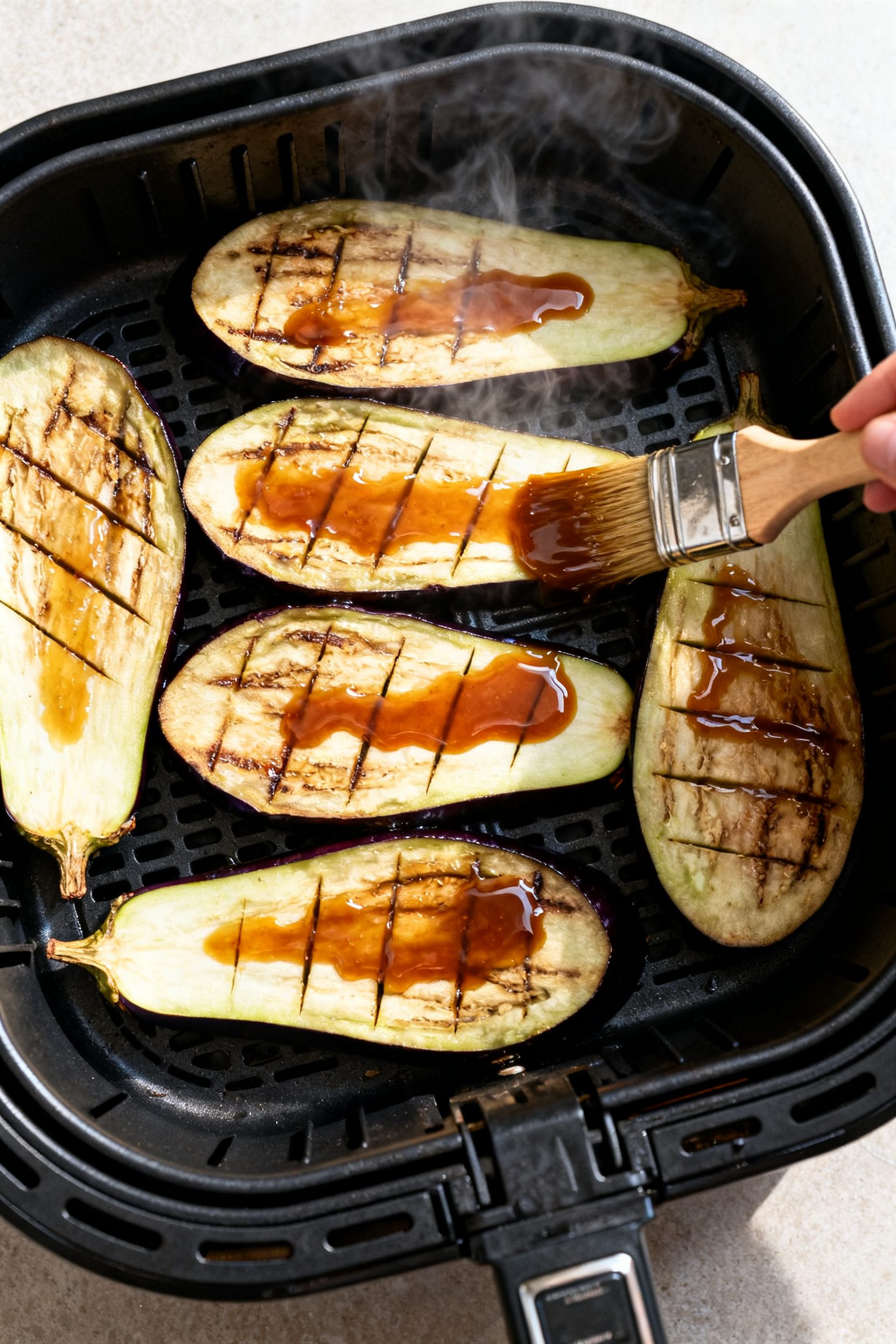
- Prep the eggplant: Trim the stems. For Japanese/Chinese eggplant, slice lengthwise in half.
For globe eggplant, cut into 1-inch thick half-moons or quarters. Score the cut sides in a crosshatch pattern, about 1/4 inch deep, without cutting through the skin.
- Season and oil: Brush or rub the cut sides with the neutral oil. Sprinkle with salt and pepper.
This helps draw out moisture and jumpstarts browning.
- Preheat the air fryer: Set to 400°F (200°C) for 3 minutes so the basket is hot when the eggplant goes in.
- Make the miso glaze: In a small bowl, whisk together miso paste, soy sauce or tamari, mirin, maple syrup or honey, sesame oil, garlic, and ginger. It should be smooth and spreadable. If it’s too thick, add 1 teaspoon of water.
- Air fry the eggplant, round one: Arrange the eggplant cut-side up in the basket.
Cook for 8–10 minutes, until the flesh is soft and lightly golden. If using globe eggplant chunks, shake halfway for even cooking.
- Glaze generously: Brush the miso mixture over the cut sides, getting it into the score marks. Don’t be shy—thick coverage leads to a glossy finish.
- Air fry to caramelize: Return to the air fryer for 3–5 minutes, until the glaze bubbles and turns a shade darker.
Watch closely in the last minute to prevent scorching.
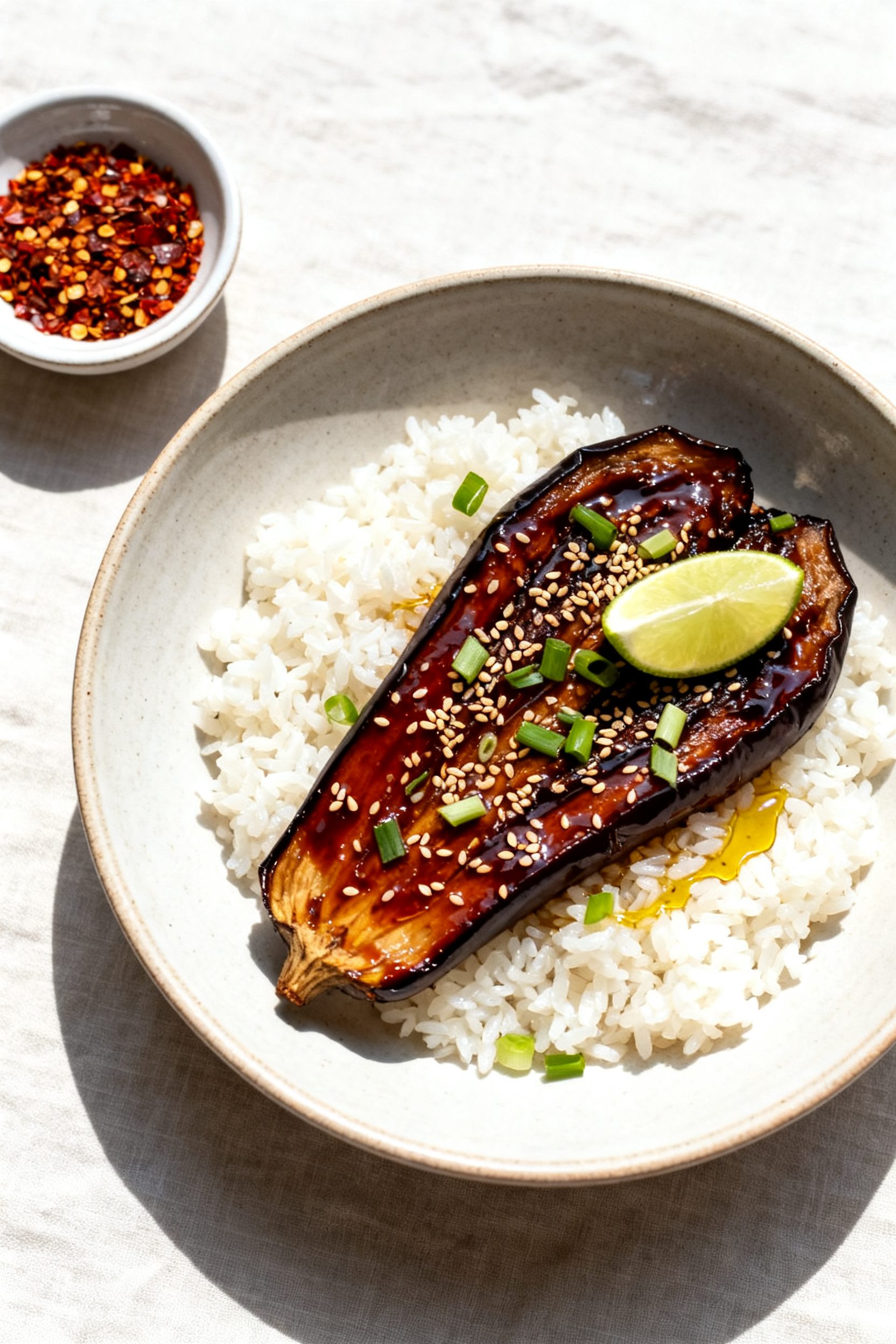
- Finish and serve: Sprinkle with sesame seeds and scallions. Add a squeeze of lime for brightness. Serve hot over rice, noodles, or as a side to grilled fish, tofu, or chicken.
How to Store
- Refrigerate: Store leftovers in an airtight container for up to 3 days.
- Reheat: Air fry at 350°F (175°C) for 3–4 minutes or microwave gently until warm.
Add a fresh drizzle of soy or a splash of water to loosen the glaze if needed.
- Freeze: Not recommended. The texture turns mushy after thawing.
Why This is Good for You
- Fiber-rich: Eggplant brings fiber that supports digestion and keeps meals satisfying without being heavy.
- Lower in oil: Air frying reduces the amount of oil needed compared to pan-frying, while still achieving browning.
- Probiotic potential: Miso is a fermented food. While heating can reduce live cultures, it still offers beneficial nutrients and umami depth.
- Balanced flavors, balanced plate: The sweet-savory glaze helps you enjoy more vegetables, which can lead to better overall eating habits.
What Not to Do
- Don’t skip scoring: Without those shallow cuts, the glaze won’t sink in and the center may taste bland.
- Don’t overload the basket: Crowding leads to steaming, not caramelizing.
Cook in batches if needed.
- Don’t sauce too early: Add the glaze after the eggplant softens; otherwise, sugars may burn before the flesh cooks through.
- Don’t use very dark miso for this: Red or brown miso can overpower and char faster. White miso keeps it balanced.
- Don’t forget acidity: A tiny splash of lime or rice vinegar at the end wakes up the flavors.
Recipe Variations
- Spicy Miso Eggplant: Add 1–2 teaspoons gochujang or a pinch of red pepper flakes to the glaze.
- Garlic-Lover’s Version: Double the garlic and finish with crispy fried garlic chips for texture.
- Miso-Tahini Twist: Whisk 1 tablespoon tahini into the glaze for extra creaminess and a nutty note.
- Ginger-Scallion Upgrade: Stir in 2 tablespoons finely sliced scallions and extra ginger to the glaze right before brushing.
- Sesame Crunch: Top with toasted white and black sesame seeds and a drizzle of chili crisp.
- Gluten-Free: Use tamari or coconut aminos in place of soy sauce and verify miso is gluten-free.
- Low-Sugar: Reduce maple or honey to 1–2 teaspoons and add an extra splash of mirin or water.
Can I use a regular oven instead of an air fryer?
Yes. Roast the oiled, seasoned eggplant at 425°F (220°C) for 15–20 minutes until tender.
Brush with glaze, then roast 3–5 minutes more to caramelize. Broil briefly at the end if you want extra char—just watch closely.
Which eggplant is best for this recipe?
Japanese or Chinese eggplants are ideal because they’re slender, tender, and less bitter. A globe eggplant works too—just slice into thick pieces and adjust cooking time so the centers become soft before glazing.
How do I keep eggplant from turning soggy?
Use high heat, avoid crowding, and start with a hot basket.
Lightly oil the cut sides and pre-cook before glazing. If your eggplant is very seedy or old, it can hold more moisture—choose firm, glossy ones for the best texture.
Do I need to salt the eggplant first?
Not always. With fresh, thin-skinned varieties, salting isn’t necessary.
If you’re using a large globe eggplant that tastes bitter or very watery, salting for 20–30 minutes, then patting dry, can help.
Can I make it vegan?
Yes. Use maple syrup instead of honey and tamari for gluten-free if needed. Everything else in the base recipe is plant-based.
What can I serve with miso eggplant?
Try steamed rice, soba noodles, or quinoa.
For protein, pair with crispy tofu, teriyaki salmon, miso cod, or sesame chicken. Add quick sides like cucumber salad or sautéed greens.
Why did my glaze burn?
The sugars in maple or honey can scorch if added too soon or cooked too long. Apply the glaze after the eggplant softens and keep the final cook short.
Lower the temperature by 10–15 degrees if your air fryer runs hot.
Can I make the glaze ahead?
Absolutely. Mix it up to 5 days in advance and refrigerate. Stir well before using, and thin with 1–2 teaspoons of water if it thickens.
In Conclusion
Air Fryer Miso Eggplant gives you big, restaurant-worthy flavor with weeknight simplicity.
The glaze is sweet-savory and packed with umami, while the air fryer keeps the texture silky inside and caramelized outside. With a handful of pantry staples and a few smart steps, you’ll have a flexible side—or a light main—that fits just about any meal. Keep it simple, or try a variation to make it your own.
Either way, this is one of those recipes you’ll come back to again and again.