Air Fryer Dehydrated Peppers – Simple, Flavorful Pantry Staple
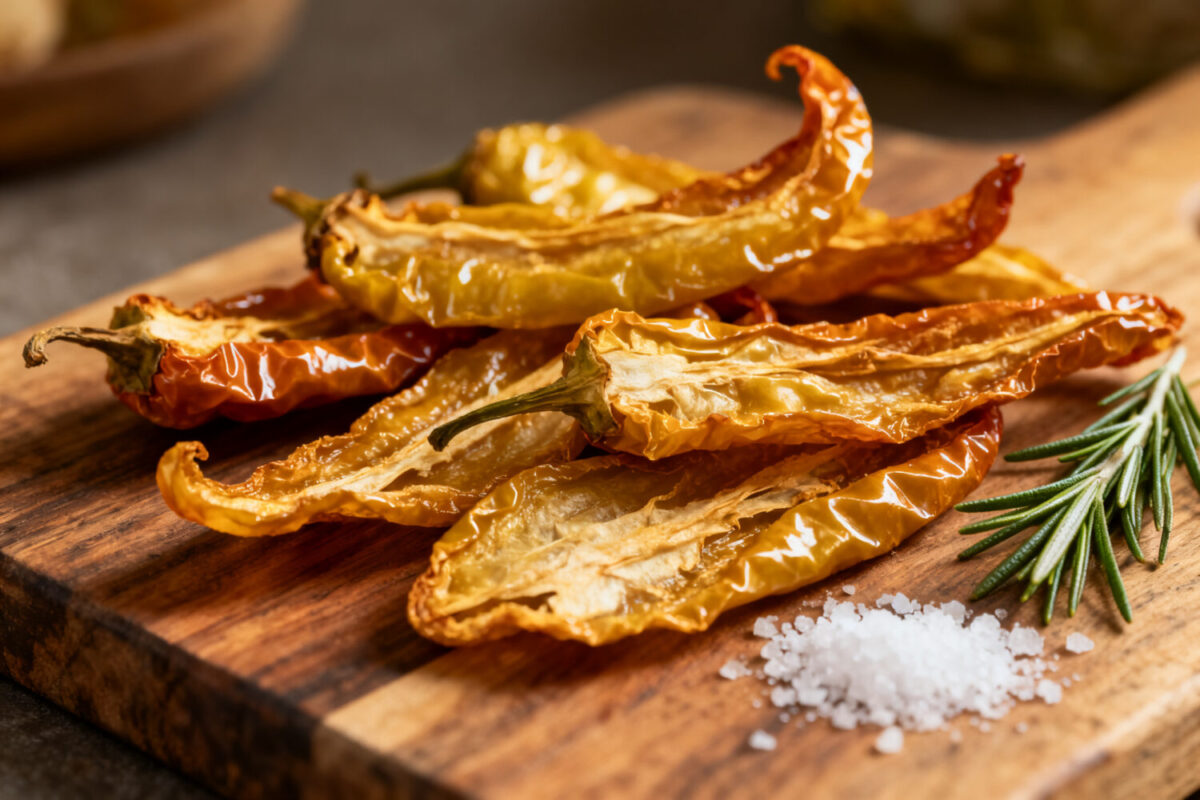
If you love bold, concentrated flavor with almost no effort, dehydrated peppers are a game changer. An air fryer makes the process fast and reliable, even if you’ve never dehydrated anything before. You’ll get sweet, smoky, or spicy notes—depending on your peppers—that you can add to soups, sauces, rubs, and more.
The best part: you control the texture, from chewy strips to crisp flakes. With a little prep, you can turn a handful of fresh peppers into a jar of intense flavor that lasts for months.

Air Fryer Dehydrated Peppers – Simple, Flavorful Pantry Staple
Ingredients
- Fresh peppers of your choice bell, jalapeño, serrano, poblano, Fresno, habanero, or sweet mini peppers
- Optional: A pinch of salt or lemon juice for pre-treatment helps preserve color in sweet peppers
- Optional equipment: Food-safe gloves for hot peppers
Instructions
- Choose your peppers: Use firm, unwrinkled peppers with bright color. Any type works. Hot peppers require gloves to protect your hands.
- Wash and dry: Rinse under cool water and pat dry thoroughly. Excess surface moisture slows dehydration.
- Remove stems and seeds: For sweet peppers, remove membranes for a cleaner flavor. For hot peppers, leaving some seeds and ribs adds heat.
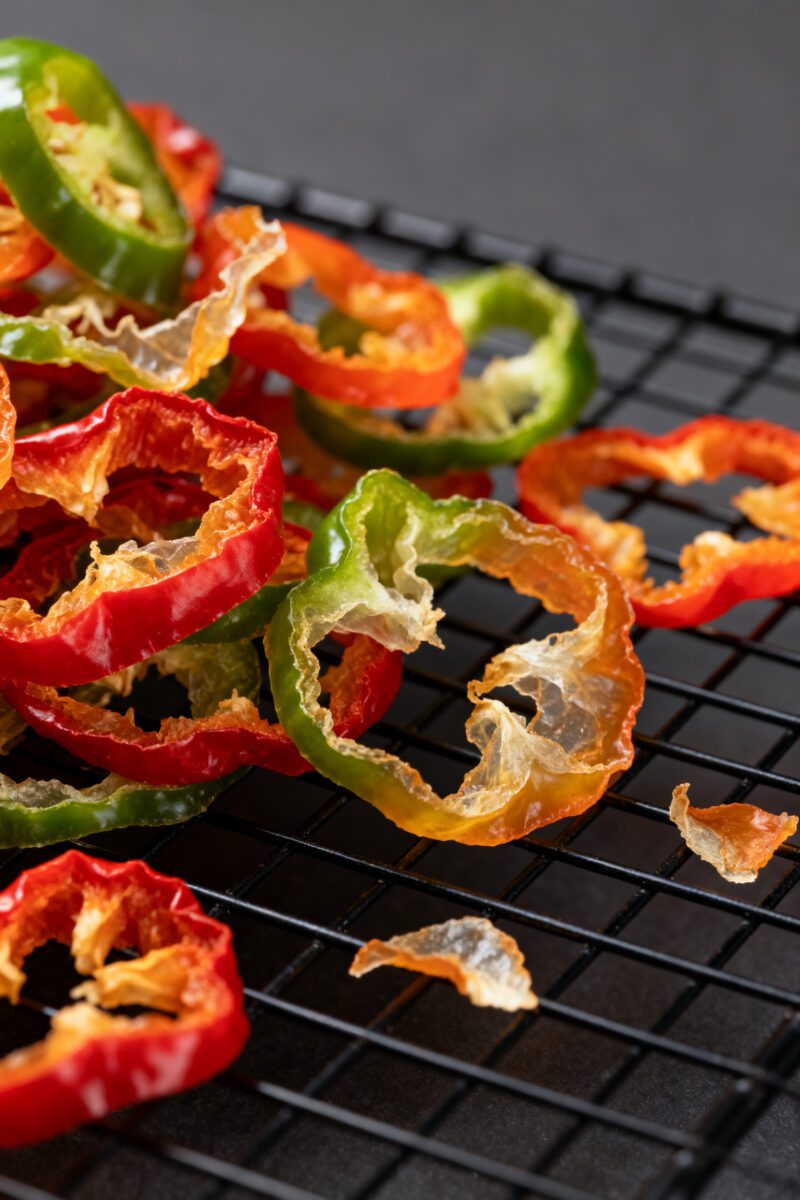
- Slice evenly: Aim for 1/8–1/4 inch (3–6 mm) strips or rings. Thinner slices dry faster and more evenly.
- Optional pre-treatment: Toss sweet peppers with a tiny pinch of salt or a quick dip in diluted lemon juice (1 tablespoon per cup of water) to help color.
- Pat dry again.
- Arrange in the air fryer: Spread in a single layer on the basket or a mesh rack. Do not overlap.
- Set temperature: Use the lowest setting your air fryer allows, ideally 120–140°F (49–60°C). If your model only goes down to 160°F (71°C), use that and check frequently to avoid browning.
- Dry time: Start with 2 hours, then check every 20–30 minutes. Total time varies:
- Thin rings: 2–3 hours
- Thicker strips: 3–5 hours
- Very juicy peppers (like bells): up to 6 hours
- Rotate and shake: Every 45–60 minutes, rotate the tray and gently shake or flip the peppers for even drying.
- Test for doneness: Properly dehydrated peppers should be brittle or leathery with no moisture when torn.
- They should not feel tacky or bend without breaking.
- Condition the batch: Cool completely, then place peppers loosely in a clean jar for 3–5 days, shaking daily. If condensation appears, return them to the air fryer for more time.
- Store: Once fully dry and conditioned, transfer to airtight containers and label with the date and pepper type.
What Makes This Special
This method is all about speed and consistency. Traditional dehydrators can take 8–12 hours, but your air fryer can finish in a fraction of the time.
You also don’t need to babysit it—just set a low temperature and check periodically.
- Faster than a dehydrator: Many air fryers can dry peppers in 2–5 hours, depending on thickness and moisture.
- Customizable texture: Make strips, flakes, or powder using the same batch—just vary slicing and time.
- Low waste: Great for using up a big harvest or a discount bag from the market.
- Big flavor: Dehydration concentrates sweetness and heat without added oil or sugar.
Ingredients
- Fresh peppers of your choice (bell, jalapeño, serrano, poblano, Fresno, habanero, or sweet mini peppers)
- Optional: A pinch of salt or lemon juice for pre-treatment (helps preserve color in sweet peppers)
- Optional equipment: Food-safe gloves for hot peppers
How to Make It
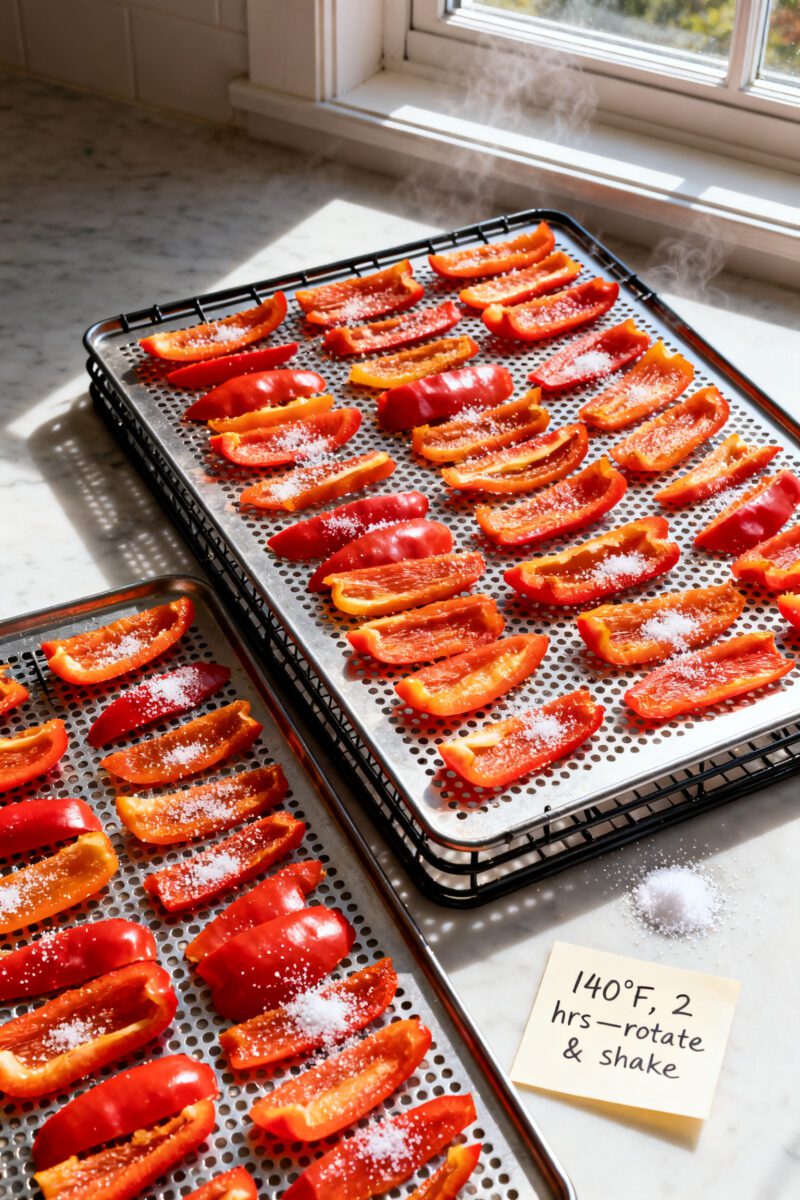
- Choose your peppers: Use firm, unwrinkled peppers with bright color. Any type works. Hot peppers require gloves to protect your hands.
- Wash and dry: Rinse under cool water and pat dry thoroughly. Excess surface moisture slows dehydration.
- Remove stems and seeds: For sweet peppers, remove membranes for a cleaner flavor. For hot peppers, leaving some seeds and ribs adds heat.
- Slice evenly: Aim for 1/8–1/4 inch (3–6 mm) strips or rings. Thinner slices dry faster and more evenly.
- Optional pre-treatment: Toss sweet peppers with a tiny pinch of salt or a quick dip in diluted lemon juice (1 tablespoon per cup of water) to help color.
Pat dry again.
- Arrange in the air fryer: Spread in a single layer on the basket or a mesh rack. Do not overlap.
- Set temperature: Use the lowest setting your air fryer allows, ideally 120–140°F (49–60°C). If your model only goes down to 160°F (71°C), use that and check frequently to avoid browning.
- Dry time: Start with 2 hours, then check every 20–30 minutes. Total time varies:
- Thin rings: 2–3 hours
- Thicker strips: 3–5 hours
- Very juicy peppers (like bells): up to 6 hours
- Rotate and shake: Every 45–60 minutes, rotate the tray and gently shake or flip the peppers for even drying.
- Test for doneness: Properly dehydrated peppers should be brittle or leathery with no moisture when torn.
They should not feel tacky or bend without breaking.
- Condition the batch: Cool completely, then place peppers loosely in a clean jar for 3–5 days, shaking daily. If condensation appears, return them to the air fryer for more time.
- Store: Once fully dry and conditioned, transfer to airtight containers and label with the date and pepper type.
Storage Instructions
- Room temperature: Keep in airtight jars in a cool, dark cabinet for up to 6–12 months.
- Long-term storage: For best flavor and color, use within 6 months. Add a food-safe desiccant pack for extra protection.
- Freezer option: Store in zip-top freezer bags for 1+ years.
This locks in color and heat, especially for hot peppers.
- Label clearly: Note the pepper variety and date; heat level can be surprisingly strong once concentrated.
Why This is Good for You
- Nutrient retention: Dehydration preserves many vitamins and antioxidants found in peppers without adding oil.
- No additives: You control the process—no preservatives, no excess sodium.
- Flavor booster: A small pinch adds punch to healthy dishes, helping you use less salt or heavy sauces.
- Low waste, budget-friendly: Stretch your grocery budget by preserving peak-season produce.
Common Mistakes to Avoid
- Using high heat: Temperatures above 160°F (71°C) can cook or brown peppers instead of drying them, leading to bitter flavors.
- Overcrowding the basket: Overlapping pieces trap steam and cause uneven drying and potential spoilage.
- Skipping conditioning: Without this step, hidden moisture can cause mold in storage.
- Inconsistent slicing: Thick and thin pieces dry at different rates, increasing the risk of under- or over-drying.
- Storing while warm: Warm peppers release residual moisture in sealed containers—always cool fully first.
Alternatives
- Oven method: Set to the lowest temp (often 170–200°F/77–93°C), prop the door slightly open, and dry on lined sheets. Time: 4–8 hours.
- Sun-drying: Works in hot, dry climates. Use mesh screens and bring indoors at night.
Slower and weather-dependent.
- Dehydrator: Purpose-built, energy-efficient, and very consistent at 125–135°F (52–57°C).
- Smoked then dried: Briefly smoke peppers first (especially poblanos or jalapeños), then dehydrate for a deeper, smoky flavor.
FAQ
What temperature should I use if my air fryer doesn’t go below 160°F (71°C)?
Use 160°F and check often. Keep the basket slightly ajar if possible to vent moisture, and rotate more frequently to prevent browning. Dry in shorter intervals and test for doneness.
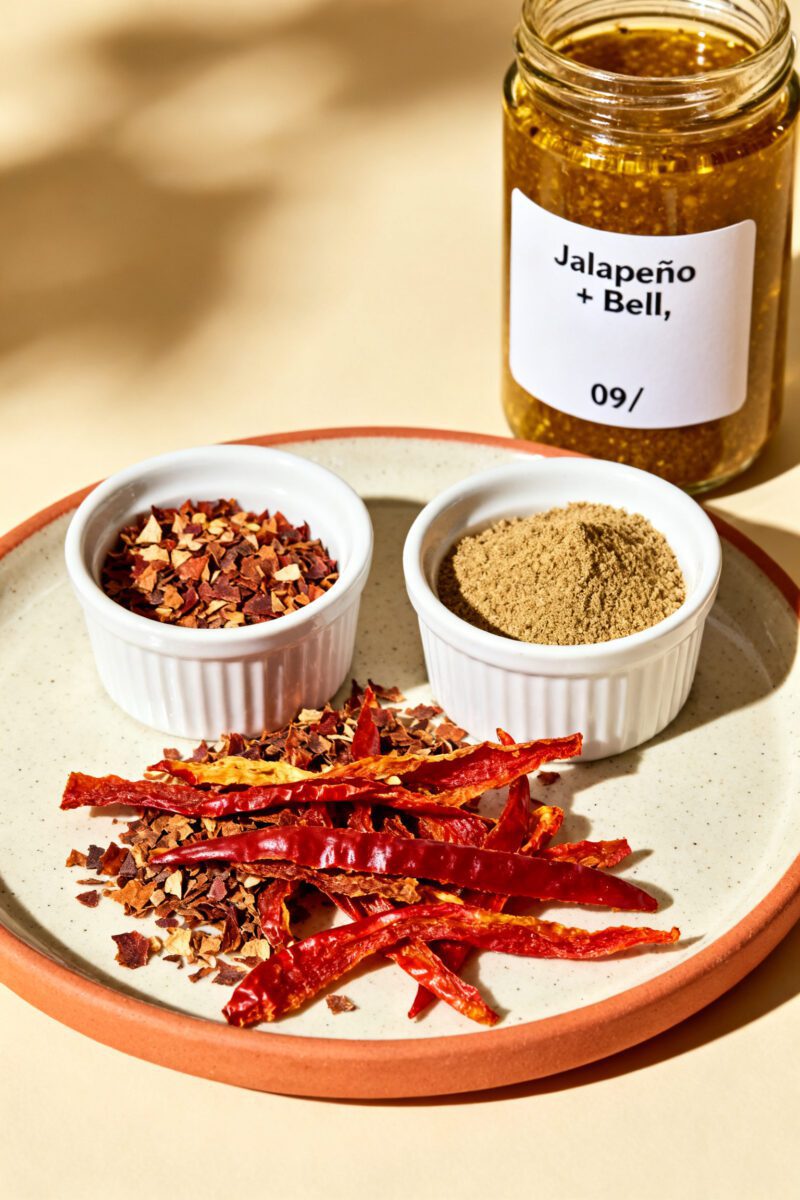
How do I turn dehydrated peppers into flakes or powder?
Once fully dry and cooled, pulse in a spice grinder or blender.
For flakes, use short pulses. For powder, grind fine and sift. Wear a mask for hot varieties to avoid irritation.
Do I need to blanch peppers before dehydrating?
No. Peppers dehydrate well without blanching.
A quick lemon-water dip can help preserve color in sweet peppers, but it’s optional.
How can I rehydrate them for cooking?
Cover with hot water or broth for 10–20 minutes until softened. Use the soaking liquid for extra flavor in soups, sauces, or grains.
What’s the best way to use dehydrated peppers?
Add to chili, stews, stir-fries, pasta sauce, pizza, eggs, or dry rubs. Grind into powder for spice blends.
Rehydrate strips for fajitas or toss flakes into salad dressings.
How do I know they’re fully dry?
They should feel papery or brittle with no sticky spots. Tear a piece—if it snaps or shows no moisture inside, it’s done. If in doubt, dry a little longer.
Can I mix different pepper types in one batch?
Yes, but match thickness and moisture levels.
Keep hot peppers separate if you want to control heat. Label jars clearly so you remember the mix.
Are the seeds safe to keep?
Yes, but they can add bitterness and unpredictable heat. For a cleaner flavor, remove most seeds before dehydrating and save a few if you want extra kick.
Why did my peppers turn brown?
Likely too much heat or prolonged time.
Lower the temperature, slice thinner, and rotate more often next time. A slight color change is normal, but deep browning can taste bitter.
Can I oil or season the peppers before drying?
Avoid oil—it blocks moisture release and shortens shelf life. Dry seasonings like garlic powder or smoked paprika are fine, but use lightly to prevent clumping.
In Conclusion
Air fryer dehydrated peppers are an easy, reliable way to pack big flavor into a small jar.
With low heat, even slices, and a little patience, you’ll get crisp, shelf-stable peppers ready for flakes, powder, or rehydrated strips. Store them well, and you’ve got a colorful pantry boost for months. Once you try a batch, you’ll start saving every perfect pepper you can find.