Air Fryer Chinese Eggplant Recipe – Crisp, Saucy, and Weeknight-Friendly
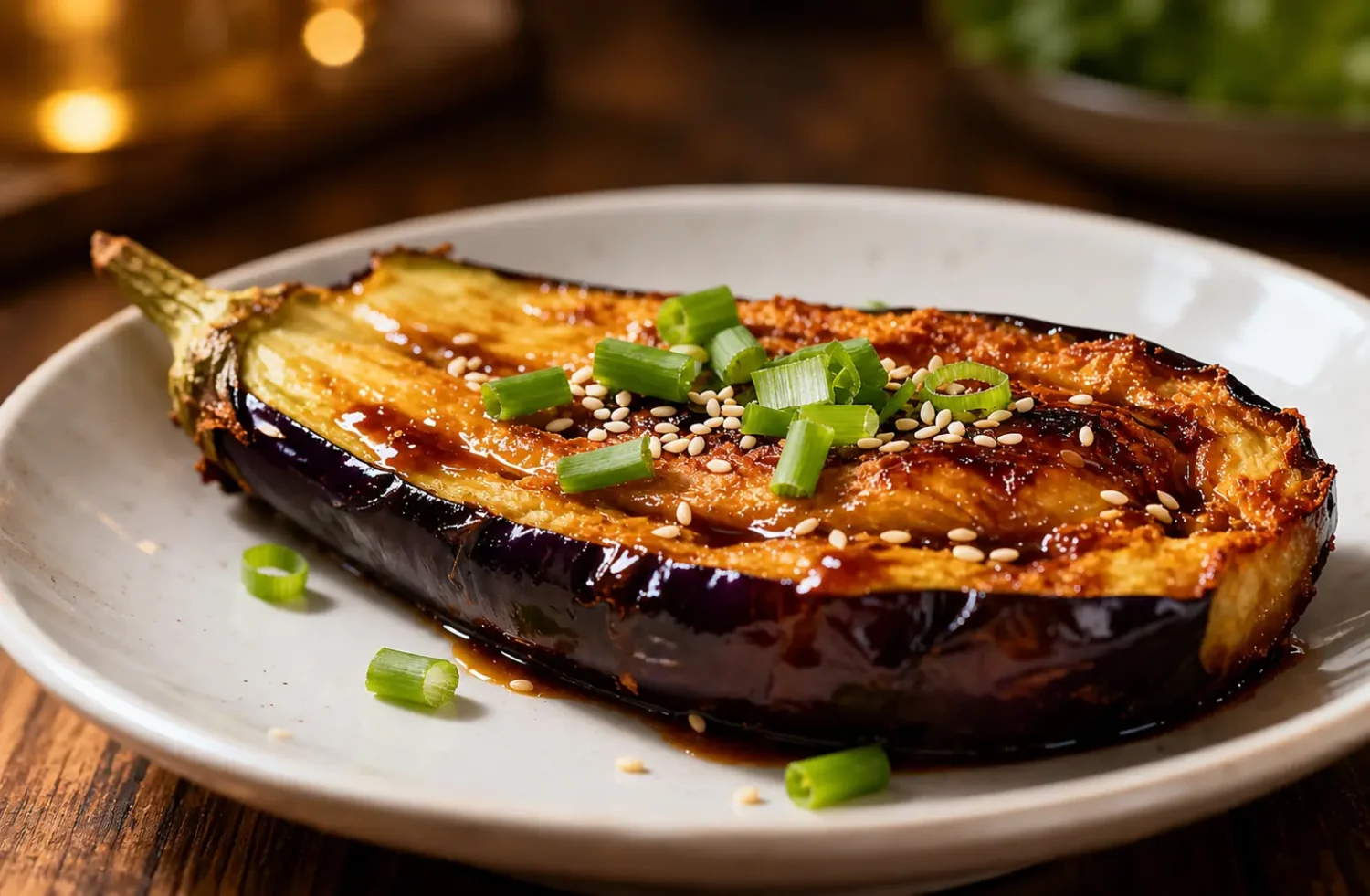
Chinese eggplant cooks fast, so it’s perfect for weeknights when you want big flavor without babysitting a pan. The air fryer turns soft eggplant into something lightly crisp on the edges and tender inside, ready to soak up a savory, garlicky sauce. This version keeps the rich taste of takeout-style eggplant, but with far less oil.
It’s simple, satisfying, and great over rice or alongside noodles. If you’re new to air fryers, this is a forgiving, low-stress recipe to start with.
Air Fryer Chinese Eggplant Recipe – Crisp, Saucy, and Weeknight-Friendly
Ingredients
- Chinese eggplant: 2 large or 3 medium (about 1.5 pounds), cut into 2-inch batons
- Neutral oil: 1–2 tablespoons (avocado, canola, or grapeseed)
- Cornstarch: 2 teaspoons, for light coating
- Garlic: 3–4 cloves, minced
- Ginger: 1 teaspoon fresh grated (optional but recommended)
- Scallions: 2, thinly sliced (white and green parts separated)
- Soy sauce: 2 tablespoons (use tamari for gluten-free)
- Oyster sauce: 1 tablespoon (or vegetarian mushroom stir-fry sauce)
- Rice vinegar: 1 tablespoon
- Honey or sugar: 2 teaspoons
- Sesame oil: 1 teaspoon
- Chili flakes or chili crisp: 1/2–1 teaspoon, to taste
- Water: 2–3 tablespoons, plus more as needed for thinning
- Sesame seeds: 1 teaspoon, for garnish (optional)
- Cooked rice or noodles: for serving
Instructions
- Prep the eggplant: Trim the ends and cut into thick batons, about 2 inches long and 3/4 inch wide. If the eggplants are older or very large, you can peel a few long strips of skin to reduce chewiness.
- Season and coat: Toss the eggplant with 1 tablespoon oil, a pinch of salt, and the cornstarch until lightly coated. The cornstarch should disappear into a thin film—add a few drops more oil if needed.
- Preheat the air fryer: Set to 400°F (200°C) for 3 minutes. A hot basket helps prevent sticking and promotes browning.
- Air fry in a single layer: Arrange the eggplant in one layer with a bit of space between pieces. Cook for 8–10 minutes, shaking the basket or flipping halfway. Aim for deep golden edges and tender centers. Work in batches if needed.
- Make the sauce base: While the eggplant cooks, whisk soy sauce, oyster sauce, rice vinegar, honey, sesame oil, chili flakes, and 2 tablespoons water in a bowl. Adjust sweetness, saltiness, and heat to taste.
- Sauté aromatics: In a large skillet over medium heat, warm 1 teaspoon oil. Add garlic, ginger, and the white parts of the scallions. Cook 30–45 seconds until fragrant, stirring often.
- Simmer and thicken: Pour in the sauce mixture. Let it bubble for 30 seconds. If you prefer a thicker glaze, mix 1/2 teaspoon cornstarch with 1 teaspoon water and stir it in. Simmer until glossy.
- Toss together: Add the air-fried eggplant to the skillet and gently fold to coat. If the sauce looks tight, splash in a tablespoon of water. Finish with the green parts of the scallions.
- Serve: Plate over hot rice or noodles. Sprinkle sesame seeds and an extra drizzle of chili crisp if you like more heat.
Why This Recipe Works
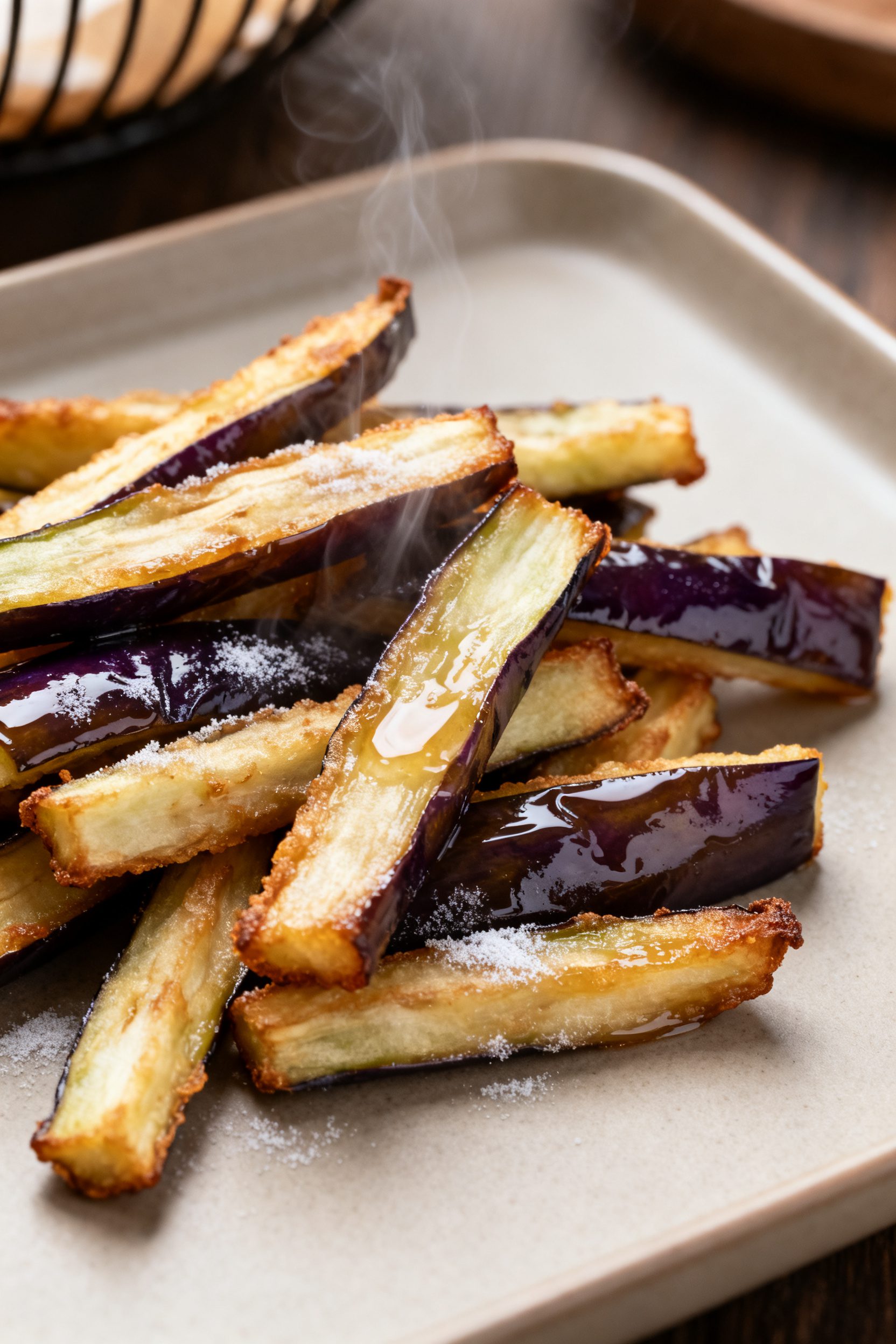
This recipe leverages the air fryer’s high heat and quick circulation to get eggplant beautifully browned with minimal oil. Chinese eggplant has a thinner skin and a sweeter flavor than globe eggplant, which means it softens faster and tastes less bitter.
A quick cornstarch dusting helps the edges crisp slightly so the sauce clings better. The sauce itself—garlic, soy, a touch of sweetness, and a hint of heat—balances savory and aromatic notes without overpowering the vegetable. Best of all, it’s ready in about 20 minutes, with less mess than stir-frying.
What You’ll Need
- Chinese eggplant: 2 large or 3 medium (about 1.5 pounds), cut into 2-inch batons
- Neutral oil: 1–2 tablespoons (avocado, canola, or grapeseed)
- Cornstarch: 2 teaspoons, for light coating
- Garlic: 3–4 cloves, minced
- Ginger: 1 teaspoon fresh grated (optional but recommended)
- Scallions: 2, thinly sliced (white and green parts separated)
- Soy sauce: 2 tablespoons (use tamari for gluten-free)
- Oyster sauce: 1 tablespoon (or vegetarian mushroom stir-fry sauce)
- Rice vinegar: 1 tablespoon
- Honey or sugar: 2 teaspoons
- Sesame oil: 1 teaspoon
- Chili flakes or chili crisp: 1/2–1 teaspoon, to taste
- Water: 2–3 tablespoons, plus more as needed for thinning
- Sesame seeds: 1 teaspoon, for garnish (optional)
- Cooked rice or noodles: for serving
Instructions
- Prep the eggplant: Trim the ends and cut into thick batons, about 2 inches long and 3/4 inch wide.
If the eggplants are older or very large, you can peel a few long strips of skin to reduce chewiness.
- Season and coat: Toss the eggplant with 1 tablespoon oil, a pinch of salt, and the cornstarch until lightly coated. The cornstarch should disappear into a thin film—add a few drops more oil if needed.
- Preheat the air fryer: Set to 400°F (200°C) for 3 minutes. A hot basket helps prevent sticking and promotes browning.
- Air fry in a single layer: Arrange the eggplant in one layer with a bit of space between pieces.
Cook for 8–10 minutes, shaking the basket or flipping halfway. Aim for deep golden edges and tender centers. Work in batches if needed.
- Make the sauce base: While the eggplant cooks, whisk soy sauce, oyster sauce, rice vinegar, honey, sesame oil, chili flakes, and 2 tablespoons water in a bowl.
Adjust sweetness, saltiness, and heat to taste.
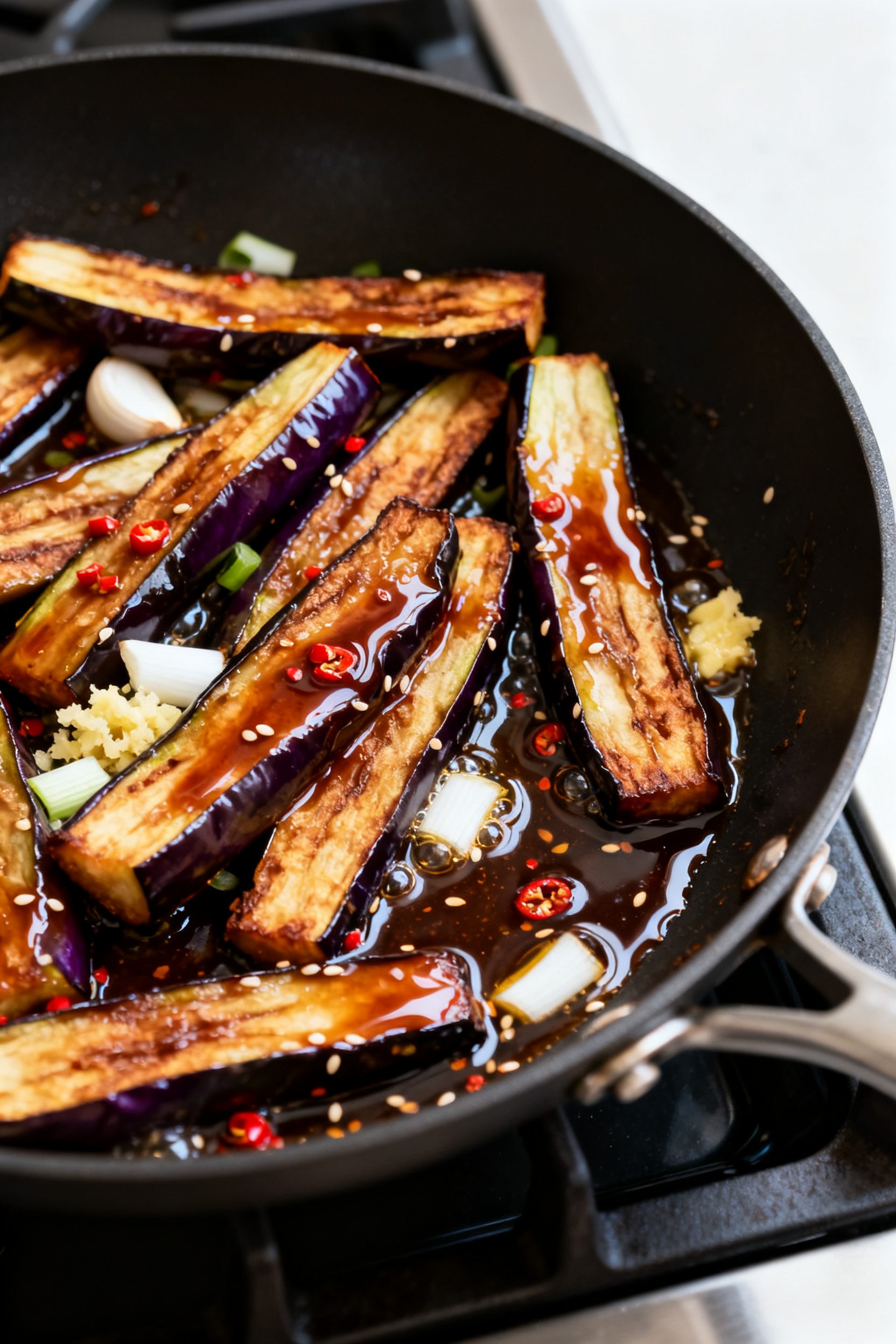
- Sauté aromatics: In a large skillet over medium heat, warm 1 teaspoon oil. Add garlic, ginger, and the white parts of the scallions. Cook 30–45 seconds until fragrant, stirring often.
- Simmer and thicken: Pour in the sauce mixture.
Let it bubble for 30 seconds. If you prefer a thicker glaze, mix 1/2 teaspoon cornstarch with 1 teaspoon water and stir it in. Simmer until glossy.
- Toss together: Add the air-fried eggplant to the skillet and gently fold to coat.
If the sauce looks tight, splash in a tablespoon of water. Finish with the green parts of the scallions.
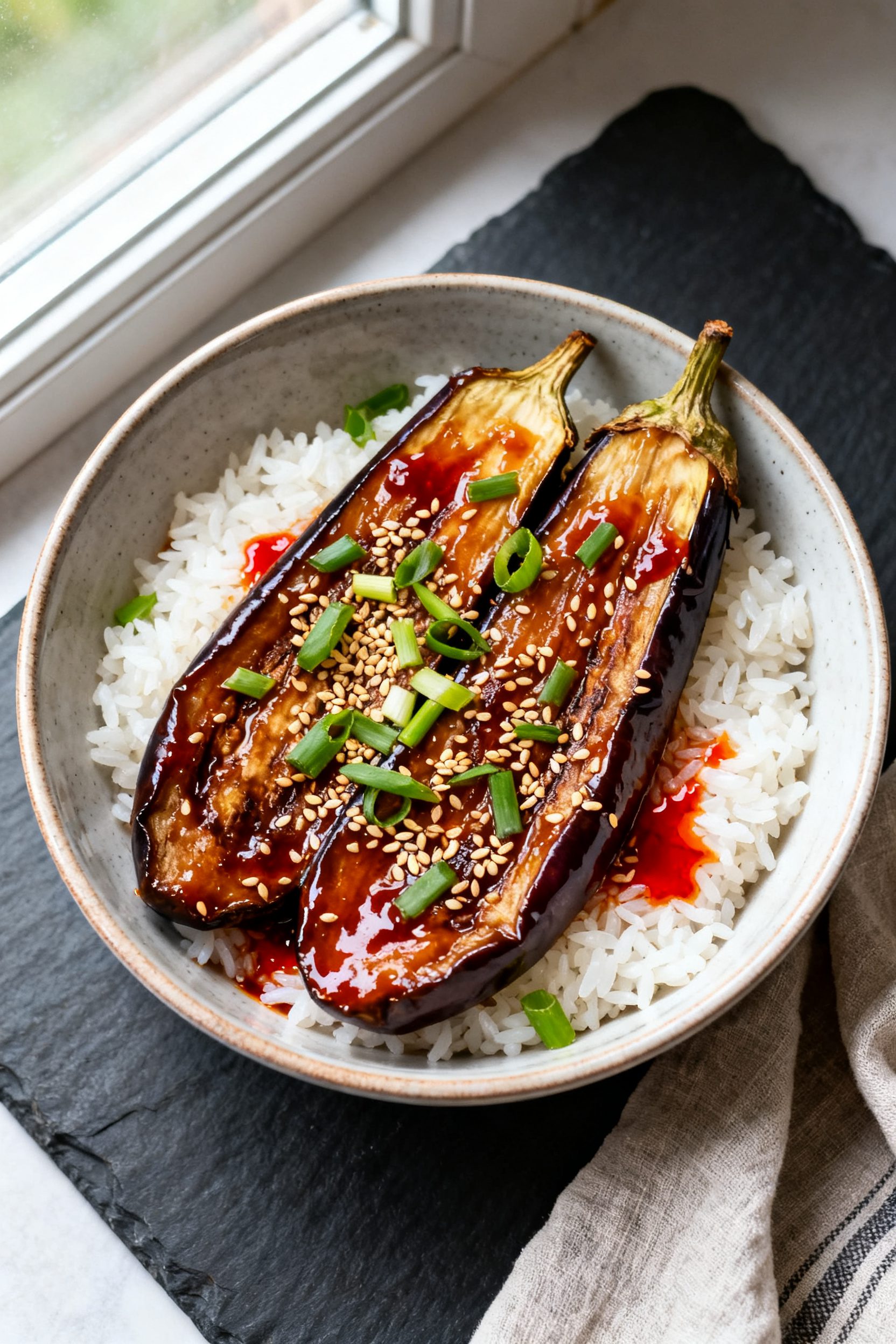
- Serve: Plate over hot rice or noodles. Sprinkle sesame seeds and an extra drizzle of chili crisp if you like more heat.
Keeping It Fresh
Eggplant tastes best right after cooking, when the edges are crisp and the inside is silky.
If you have leftovers, store them in an airtight container in the fridge for up to 3 days. Reheat in the air fryer at 360°F (182°C) for 3–4 minutes to revive some texture, or use a hot skillet to rewarm and re-glaze. If the sauce thickens too much after chilling, add a spoonful of water as it reheats.
For meal prep, you can cut the eggplant a day ahead and keep it in a sealed container lined with a paper towel.
Health Benefits
- Lower in oil: Air frying uses far less oil than deep-frying or heavy stir-fries, which can reduce overall calories.
- Fiber-rich: Eggplant provides fiber that supports digestion and helps you feel satisfied.
- Phytonutrients: The purple skin contains antioxidants like nasunin, which supports cellular health.
- Balanced sauce: The sauce uses modest sugar and relies on aromatics for flavor, keeping it lighter without losing taste.
What Not to Do
- Don’t overcrowd the basket: Piling eggplant blocks airflow and leads to steaming instead of browning.
- Don’t skip oil entirely: A small amount helps the eggplant caramelize and prevents a dry, leathery texture.
- Don’t overcook: Eggplant can collapse and turn mushy. Pull it when it’s tender with lightly crisp edges.
- Don’t drown it in sauce: Too much liquid makes the coating soggy. Aim for a glossy glaze that clings.
- Don’t rely on globe eggplant the same way: It’s denser and can be bitter.
If using it, cut smaller and cook a bit longer.
Alternatives
- Protein add-ins: Toss in crispy air-fried tofu cubes, sautéed ground turkey, or thinly sliced chicken for a heartier dish.
- Vegetarian and vegan: Use mushroom-based “oyster” sauce or extra soy sauce and a dash of mushroom powder for depth.
- Gluten-free: Swap soy sauce with tamari and confirm your oyster-style sauce is gluten-free.
- Sauce variations: Add a teaspoon of black vinegar for tangy depth, or a spoon of doubanjiang for a bolder, spicy kick.
- Herb twist: Finish with fresh Thai basil or cilantro for a bright, aromatic note.
- No cornstarch: Use potato starch or tapioca starch for similar light crisping.
FAQ
Do I need to salt the eggplant first?
With fresh Chinese eggplant, salting to remove bitterness isn’t usually necessary. If your eggplant is older or you’re sensitive to bitterness, sprinkle with salt, rest 15 minutes, then pat dry before coating. It can also help the texture hold up.
Can I cook everything in the air fryer, including the sauce?
You can air fry the eggplant and then toss it in a bowl with a warmed sauce, but stovetop simmering creates a glossy finish and cooks the aromatics properly.
If you must, microwave the sauce ingredients in short bursts and mix well, but keep an eye on consistency.
What temperature and time work best?
400°F (200°C) for 8–10 minutes is a solid starting point. Shake or flip halfway. Adjust by a minute or two based on your air fryer’s power and the size of your eggplant pieces.
How do I keep the eggplant from sticking?
Preheat the basket and use a light coat of oil on both the eggplant and the basket if needed.
Avoid sugary sauces in the air fryer; add them after cooking to prevent sticking and burning.
Can I make it without any added sugar?
Yes. Skip the honey and rely on oyster sauce and aromatics. If you miss the balance, add a small splash of orange juice or a pinch of monk fruit sweetener.
What should I serve with it?
Steamed jasmine rice, brown rice, or garlicky noodles are all great.
Add a quick cucumber salad or blanched greens for contrast and crunch.
How spicy is this recipe?
It’s mildly spicy by default. Adjust the chili to your comfort level, or serve chili crisp on the side so everyone can customize their heat.
Can I double the recipe?
Yes, but cook the eggplant in batches to keep browning consistent. Combine everything in the skillet with the sauce at the end and thin with a splash of water if needed.
In Conclusion
This Air Fryer Chinese Eggplant Recipe delivers takeout-level flavor with less oil, fewer dishes, and weeknight speed.
The air fryer handles the browning, while a quick stovetop sauce ties everything together. It’s flexible, pantry-friendly, and easy to tailor to your taste or dietary needs. Keep it simple, don’t overcrowd the basket, and you’ll have a glossy, savory eggplant dish you’ll make on repeat.